
−16 %
Average energy use down
Spain must cut the average primary energy use of its housing stock by at least 16 % by 2030 compared with 2020, and by 20–22 % by 2035.
You may have read that from 2030 a home in Spain can only be sold with energy label E or better. Here is what has actually been decided, what has not, and how to improve your home's label at a reasonable cost.
The new rules come from the revised EU Energy Performance of Buildings Directive (EU 2024/1275). Every member state has to turn it into national law.
Spain must cut the average primary energy use of its housing stock by at least 16 % by 2030 compared with 2020, and by 20–22 % by 2035.
At least 55 % of that reduction must come from renovating the 43 % least efficient homes, in practice mostly F and G labels.
Energy certificates move to a common EU scale from A (zero-emission) to G. New Spanish certificate documents have applied since 30 September 2026.
The deadline for national transposition was 29 May 2026. Spain has implemented roughly 60 % so far; the minimum standards for existing homes have yet to be defined.
A minimum of E by 2030 and D by 2033 was proposed by the European Parliament in 2023, but it did not make it into the final directive. At the moment there is no law in Spain that forbids selling or renting a home because of its energy label. What is certain: requirements will tighten, F and G homes are first in line, and a poor label already costs value today.
Buyers compare energy certificates. A better letter makes your house easier to sell and protects its price when stricter rules arrive.
In Mallorca most household energy goes into cooling in summer and heating in winter. Insulation reduces both.
Spanish income tax deductions of 20 % or 40 % apply to energy improvements in homes carried out by 31 December 2026, and 60 % for residential buildings until 31 December 2027.
No more cold walls in winter or hot rooms under the roof in summer, and less damp and mould.
Renovate when it suits you, not when a deadline sends everyone looking for builders at the same moment.
Combine insulation with work you are doing anyway: a new façade render, new ceilings, new windows.
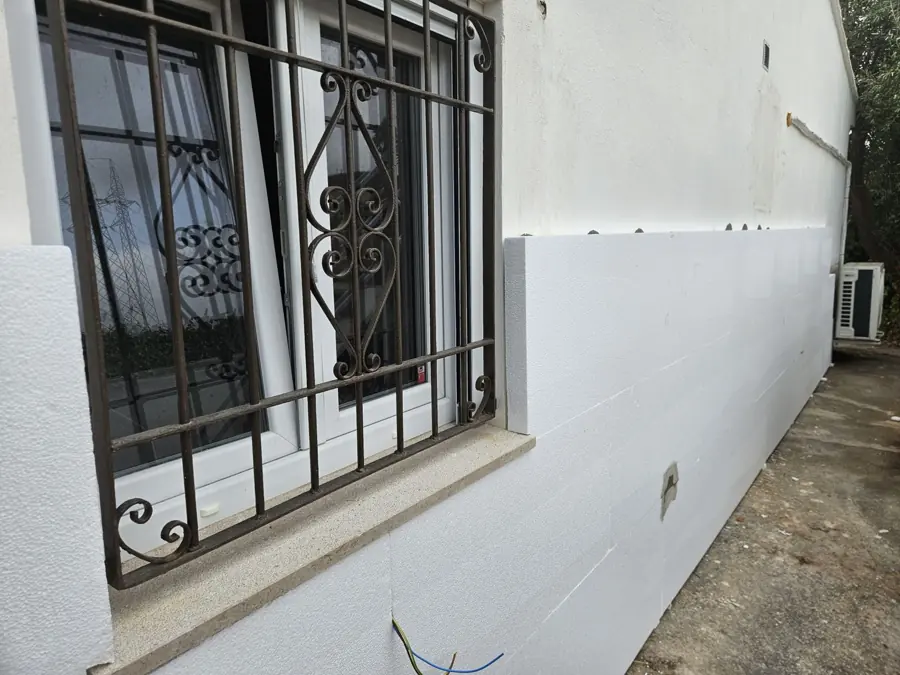
SATE stands for Sistema de Aislamiento Térmico por el Exterior: external thermal insulation, known internationally as ETICS. Insulation panels are fixed to the outside of the existing wall and finished with a reinforced render, so the house gets a new, insulated façade in one step.
Because the insulation wraps the whole outside of the building, it also covers the weak spots where heat normally escapes: floor slabs, pillars and lintels (thermal bridges). And because nothing is added on the inside, you don't lose a single square metre of living space.
Indicative price: national market guides put SATE at about 60–120 €/m² (excluding VAT, scaffolding and permits), depending on panel type, thickness and finish. Mallorca is often at the upper end. After an inspection we give you a fixed quote.
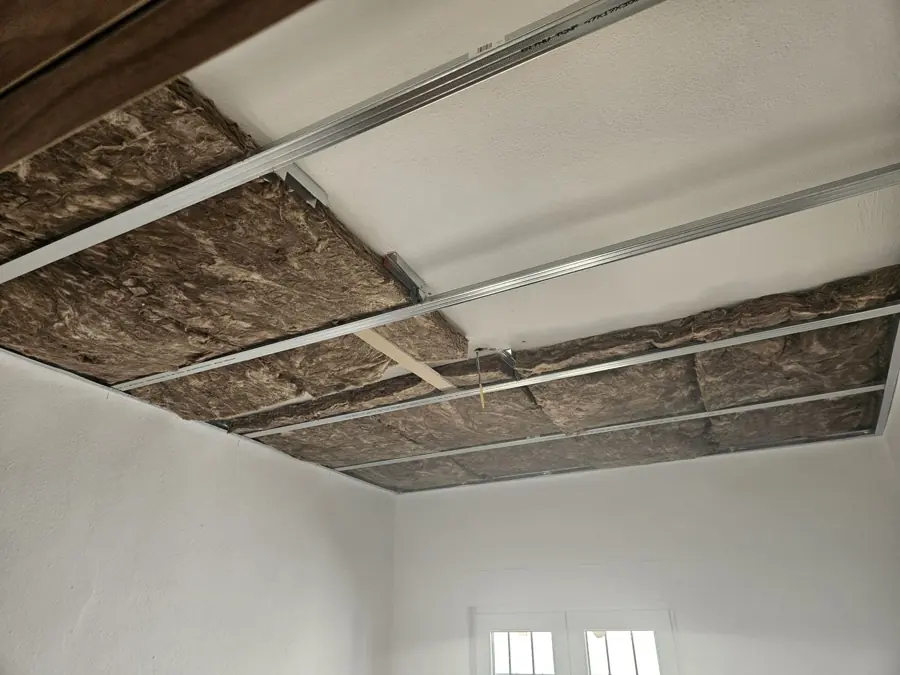
When a ceiling is renewed, for example with a new plasterboard ceiling below an old or uneven one, the space above it is open anyway. That is the cheapest moment to add insulation.
SATE on the walls plus an insulated ceiling: the house is insulated on the outside walls and directly above the rooms, which are the two places where a Mallorcan house gains and loses the most heat.
Start with the current energy certificate and an inspection: where does your house lose the most heat and coolness?
Walls, roof and ceilings, windows, then installations. We put the measures in an order that fits your budget.
A certified SATE system, ceiling insulation and finishing by our specialist teams, coordinated by us.
A new energy certificate records the improvement. You need it for the tax deduction, and it helps when you sell.
| Deduction | Condition | Max. per year | Max. deduction | Works completed by |
|---|---|---|---|---|
| 20 % | At least 7 % lower heating and cooling demand (main residence or rented home) | 5.000 € | 1.000 € | 31-12-2026 |
| 40 % | At least 30 % lower non-renewable primary energy use, or label A or B | 7.500 € | 3.000 € | 31-12-2026 |
| 60 % | The same, for the whole residential building (e.g. community of owners) | 15.000 € in total | 9.000 € | 31-12-2027 |
Conditions apply, including an energy certificate before and after the works. These deductions have been extended several times; check your own situation with your tax adviser.
SATE on the walls, mineral wool in the ceilings, with photos and video from the site.
View the insulation projectNot as things stand. That proposal was dropped from the final EU directive. Spain still has to define minimum standards for the least efficient homes; the details and dates are not fixed yet.
The EU requires countries to start with the least efficient buildings, in practice mostly homes with label F or G.
That depends on the house. In uninsulated Mallorcan houses, insulating the walls and the roof or ceilings is usually the measure with the biggest effect. A new certificate after the works shows the exact result.
Often yes, but the wall must be able to dry out. For stone and lime walls a vapour-open system (for example mineral wool with a mineral render) is used. We check for moisture before we advise.
For a typical detached house a few weeks, depending on size, weather and details. Ceilings are done room by room.
For the tax deduction, yes: a certificate before and one after the works. It is also the best starting point for choosing the right measures.
Sources
EUR-Lex – Directive (EU) 2024/1275 · Tinsa – Transposición de la EPBD en España · idealista – Mitos sobre el certificado energético · COEIB – Nuevos documentos de certificación energética · Agencia Tributaria – Deducciones eficiencia energética · habitissimo – Precio aislamiento SATE
This page is general information, not legal or tax advice. Status: November 2026.