
Protect your investment before you commit.
Understand the legal checks, permits and documentation that matter most in Mallorca property projects.
Legal Guide to Buying Property in Mallorca - What Every Foreign Buyer Needs to Know
Buying property in Spain as a foreign national is entirely straightforward - when done correctly. The legal process is well-established, transparent, and designed to protect both buyers and sellers. This guide explains the key legal steps, documents, taxes, and requirements involved in purchasing property in Mallorca and the Balearic Islands, so you know exactly what to expect before you start.
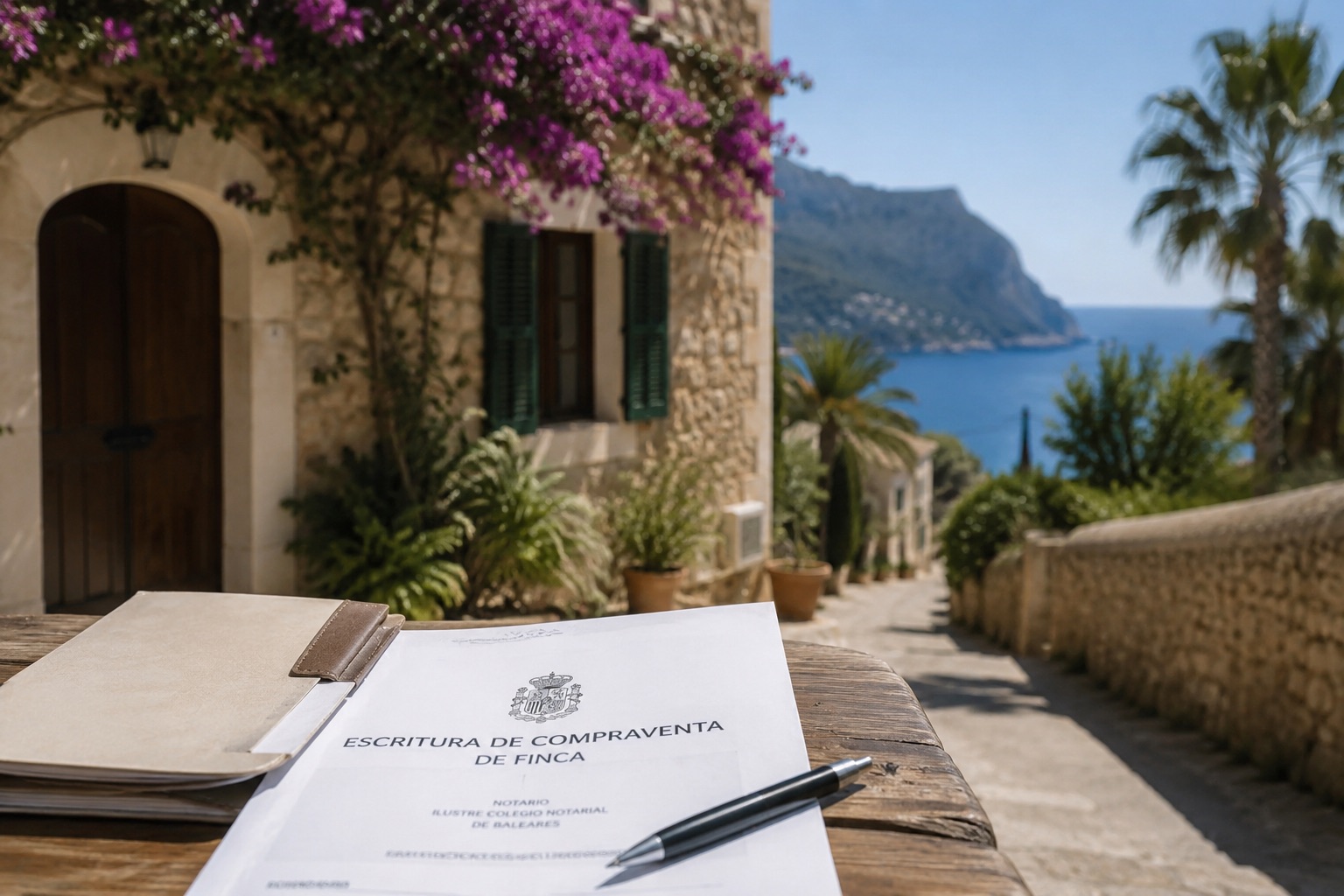
Step 1 - Appoint an Independent Spanish Lawyer
The most important legal decision you make is appointing a fully independent Spanish property lawyer (abogado) before you sign anything. Your lawyer must be independent - not recommended by the selling agent or developer, and not shared with the seller. Their sole role is to protect your interests.
Your lawyer will verify the legal status of the property, conduct due diligence, review all contracts before you sign, and guide you through the entire purchase process. Legal fees are typically 1-1.5% of the purchase price. This is not an area to cut costs.
Step 2 - The NIE Number
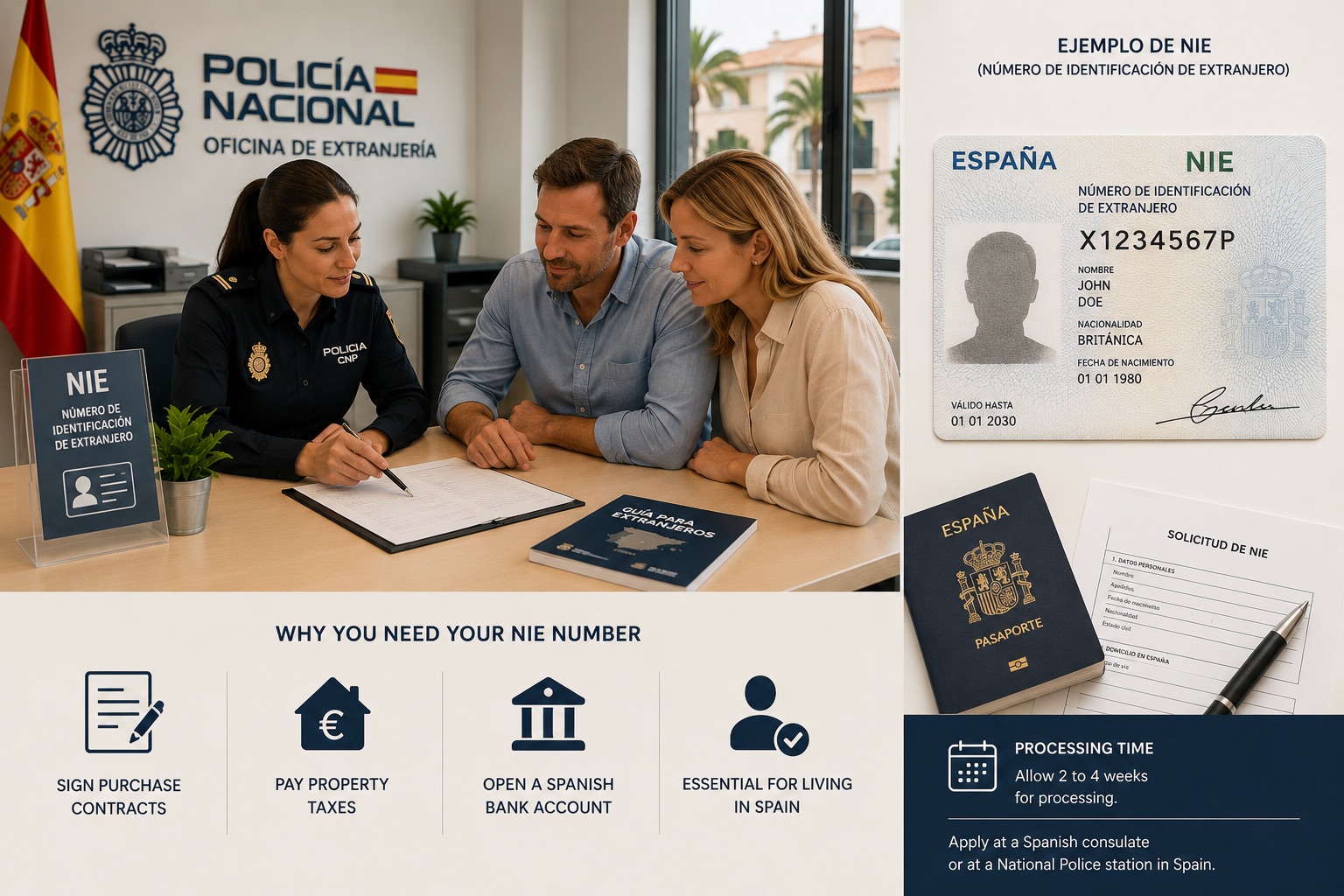
Before any property transaction can proceed in Spain, you need a Numero de Identificacion de Extranjero (NIE) - your Spanish tax identification number. This is required for signing purchase contracts, paying property taxes, and opening a Spanish bank account.
You can apply at a Spanish consulate in your country of residence or at a National Police station in Spain. Your lawyer can apply on your behalf in Spain with a notarised power of attorney. Allow two to four weeks for processing.
Step 3 - Property Due Diligence
Before committing to a purchase, your lawyer carries out a comprehensive legal check of the property.
Land Registry Check (Nota Simple)
Confirms the legal owner, the exact description of the property, and any mortgages, charges, or encumbrances registered against it. Any outstanding mortgage must be cancelled or deducted from the purchase price at completion.
Planning and Building Licences
Verifies that the property was built with the correct building licence and that all construction - including extensions, pools, and outbuildings - is legal and properly registered. Illegal constructions are common in Mallorca and can cause serious problems at the point of sale or renovation.
Mallorca-specific warning: rustic land restrictions, coastal protection rules, and municipal planning limits can materially affect what is legal on a property. This is particularly important for fincas, sea-view homes, and properties with older terraces, annexes, or pools.
Community of Owners Debts
Confirms there are no outstanding community fee debts attached to the property. Community debts transfer to the new owner for up to three years - making this check essential.
Important in Mallorca: community regulations may also restrict renovation hours, facade changes, air-conditioning placement, short-term rentals, or use of communal areas. These rules should be reviewed before exchange, not after completion.
IBI Property Tax
Confirms the property is up to date on its annual municipal property tax (Impuesto sobre Bienes Inmuebles). Outstanding IBI debt transfers with the property.
Cadastral Value and Description
Verifies the cadastral (official) description of the property matches the physical reality. Discrepancies between the registered and actual built area are common and must be resolved before or at completion.
Typical Mallorca risk: older properties may include unregistered extensions, roof terraces, guest annexes, or pools that were built years ago but never properly recorded. Holiday-rental licence assumptions should also be checked independently, as a licence does not automatically transfer with every property or ownership structure.
Step 4 - The Reservation Contract
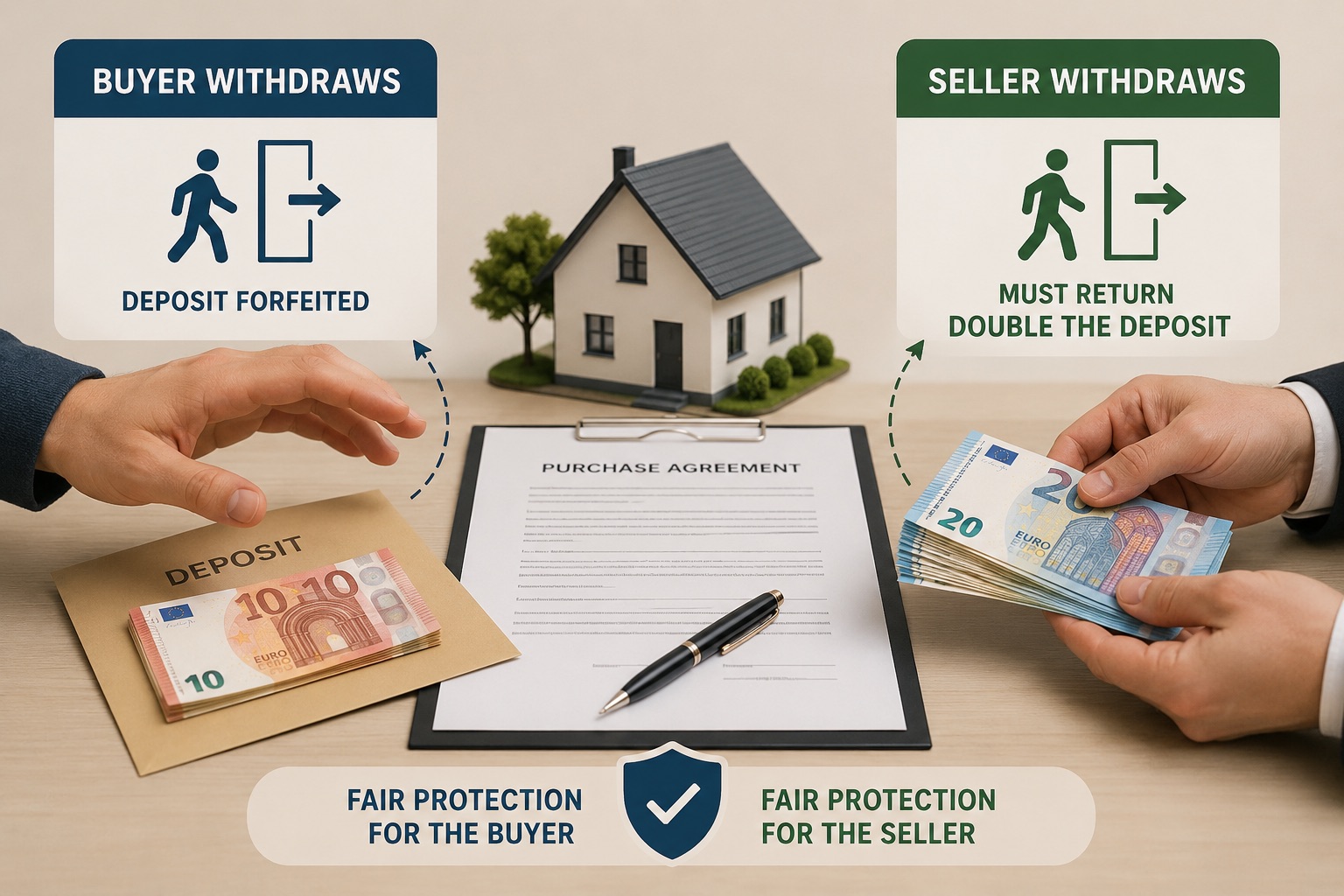
Once due diligence is underway, a reservation contract (Contrato de Reserva or Documento de Arras) is signed to secure the property and take it off the market. A deposit is paid at this stage - typically EUR6,000-EUR10,000 for a reservation, or 10% for an arras contract.
Arras Penitenciales
The most common form of deposit contract. If the buyer withdraws, the deposit is forfeited. If the seller withdraws, they must return double the deposit amount. This provides meaningful protection for both parties.
Step 5 - The Private Purchase Contract
Once due diligence is complete and all issues resolved, a Private Purchase Contract (Contrato de Compraventa) is signed by both parties. This sets out all agreed terms including price, completion date, and any conditions. A further deposit - bringing the total to typically 10% of the purchase price - is paid at this stage.
Step 6 - The Notary and Completion
The purchase completes at a Spanish notary (notario), who is a public official appointed by the state. The notary verifies the identity of the parties, reads the public deed of sale aloud, witnesses the signing, and registers the transaction. The remaining purchase price is paid at completion, typically by banker's draft.
Note: the notary acts as a public official - not as a legal adviser to either party. Your own lawyer must review the notarial deed before signing.
Step 7 - Taxes and Costs on Completion
Property Transfer Tax (ITP) - Resale Properties
ITP is the main tax on resale purchases in the Balearics, charged on a sliding scale: 8% up to EUR400,000, 9% from EUR400,000-EUR600,000, 10% from EUR600,000-EUR1,000,000, 11% above EUR1,000,000. Must be paid within 30 days of completion.
VAT and Stamp Duty - New Build Properties
New builds from developers are subject to VAT (IVA) at 10% plus Stamp Duty (AJD) at 1.2% instead of ITP.
Notary and Land Registry Fees
Combined approximately 0.5-1% of the purchase price.
Plusvalia Tax
A municipal tax on the increase in land value since the last sale. Legally the seller's responsibility - but always confirm who pays this in the purchase contract.
Ongoing Legal Obligations for Non-Resident Owners
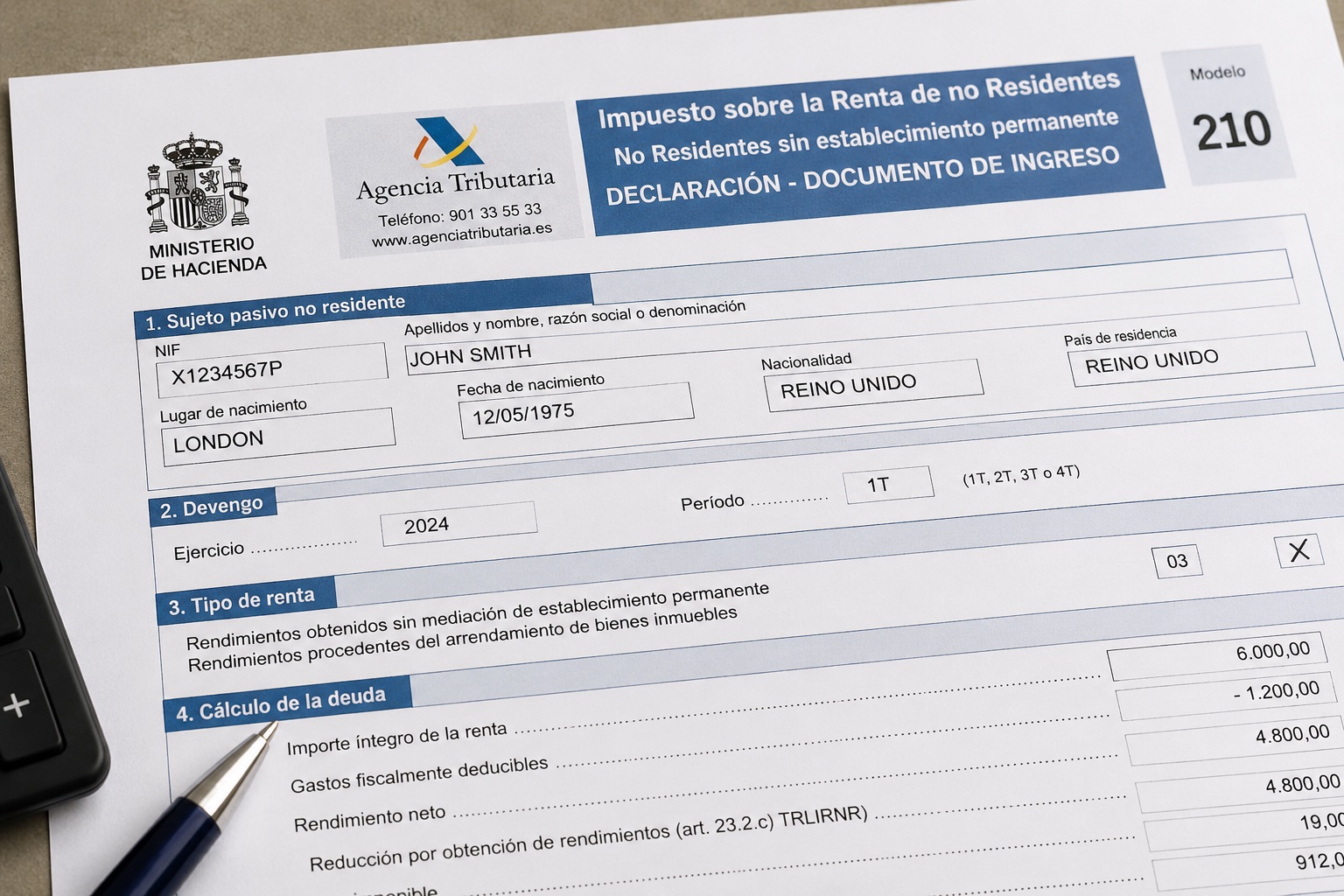
Non-Resident Income Tax (IRNR)
All non-resident property owners in Spain must file an annual non-resident income tax declaration, even if the property is not rented out. For properties not generating rental income, the tax is calculated on a deemed imputed income based on the cadastral value - typically a modest amount but mandatory.
Wealth Tax
Spain levies a wealth tax on non-residents with assets in Spain above a minimum threshold. The Balearic Islands apply their own rates. Consult a Spanish tax advisor to understand your position.
IBI Property Tax
Paid annually to the local municipality. Typically EUR500-EUR5,000 per year depending on property size and location.
Non-Resident Rental Tax
If you rent your property, rental income must be declared and taxed in Spain quarterly. EU residents are taxed on net income (income minus deductible expenses). Non-EU residents are taxed on gross income.
Frequently Asked Questions
Do I need to be present in Mallorca to complete the purchase?
No. You can grant power of attorney to your Spanish lawyer to sign on your behalf at the notary. This is common for international buyers.
Can I buy property in Spain through a company?
Yes. Some buyers purchase through a Spanish SL (limited company) or an offshore holding structure for tax planning purposes. This requires specific legal and tax advice based on your personal circumstances and home country.
What is a Habitability Certificate and do I need one?
A Cedula de Habitabilidad certifies that a property meets the minimum habitability standards required for residential use. It is required to connect utilities and is checked at the point of resale. Most properties have one. Your lawyer will verify this during due diligence.
What happens if the property has illegal constructions?
Illegal constructions can sometimes be legalised through the appropriate municipal process, but this is not always possible depending on the type and location of the works. Your lawyer must assess the specific situation and advise on the risk before you proceed with a purchase.
Your Legal Team in Mallorca
At Business ONE Group, we work alongside trusted independent lawyers and notaries to ensure every property acquisition is handled correctly, efficiently, and with full transparency. We coordinate the legal process on your behalf so nothing is missed and you are informed at every stage.
Get in touch to discuss your property purchase in Mallorca.
CONTACT US